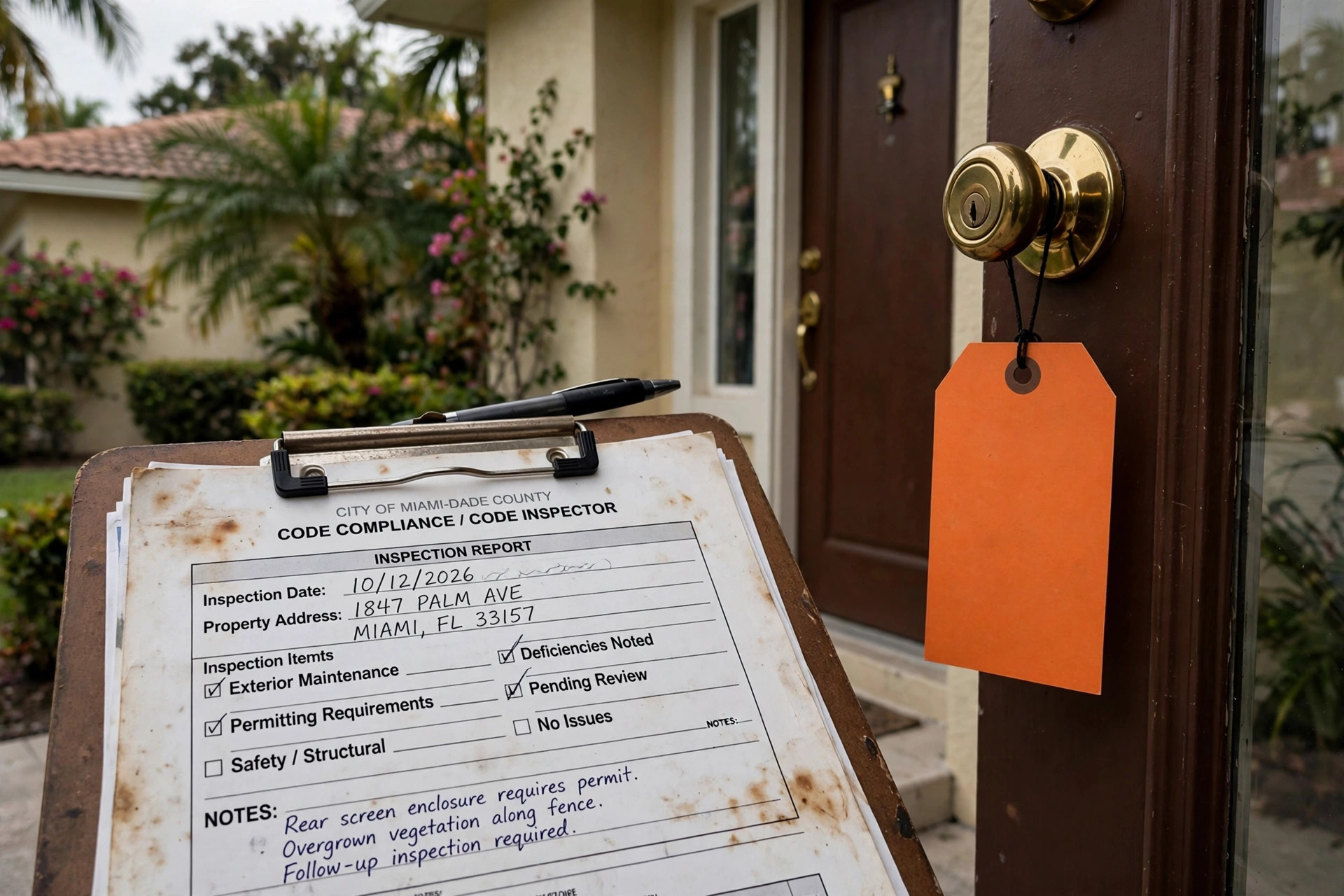
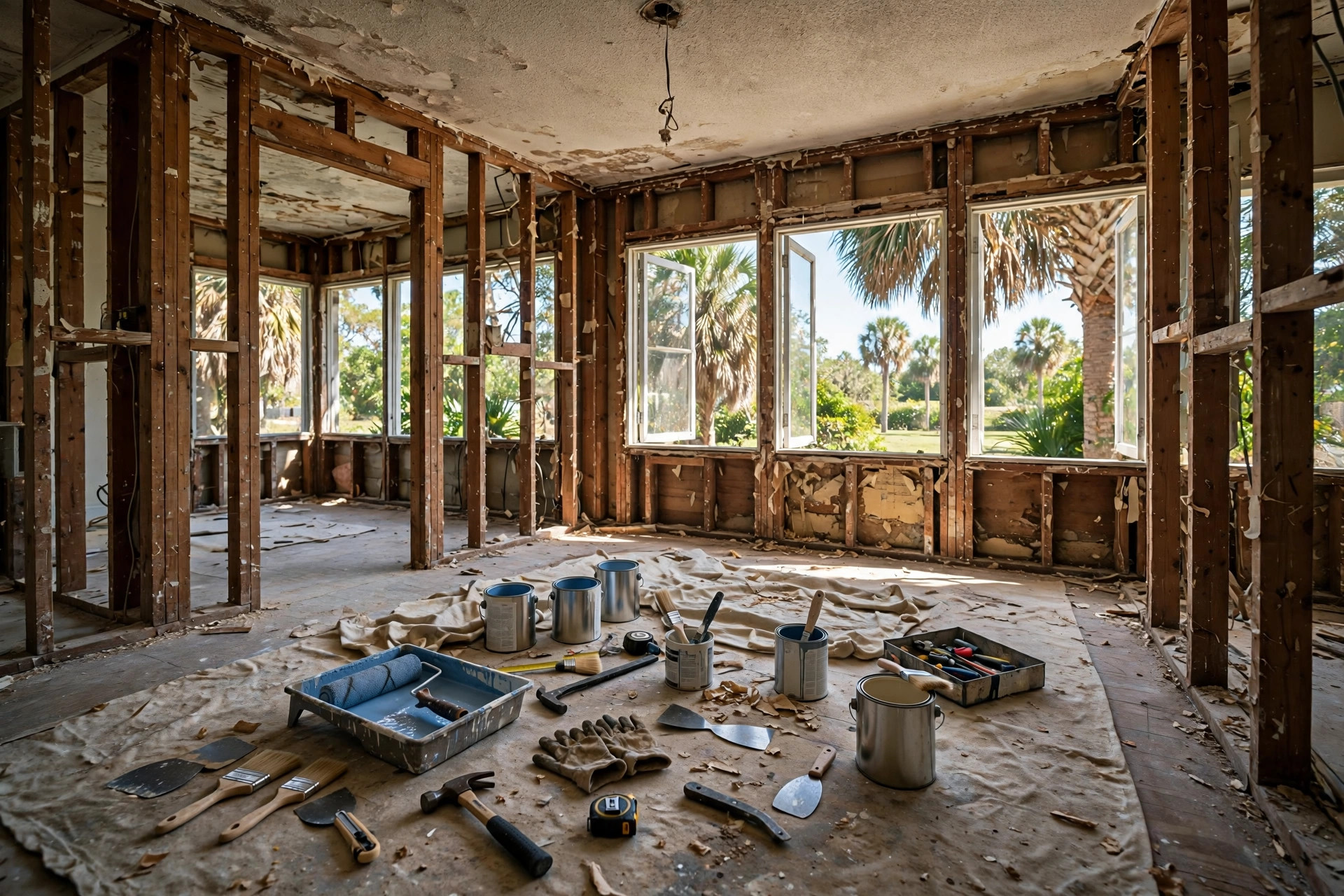
Path two: list it as-is and disclose
You can list a house with open violations, with full written disclosure. Understand the headwind: financed buyers' lenders generally won't close on a property with serious open violations or unpermitted work, so your realistic buyer pool shrinks to investors and cash buyers anyway — after you've paid for marketing time and carried the house while daily fines may still be running. Open fines do not pause because the house is listed.
Path three: sell directly to a cash buyer
This is the path built for the problem. A cash buyer purchases the property with the violations in place, takes over the cure, and deals with the city or county afterward. Any recorded lien gets settled at closing from the proceeds, like any other lien (see selling a house with a lien), and unrecorded fines are priced into the offer based on what it will take to resolve them. The seller's involvement with code enforcement ends at the closing table.
What a buyer checks before making an offer
We run the same searches the title company will: open code cases and accrued fines with the city and county, the recorded lien position, and open or expired permits on the property. In Broward, that means city code enforcement records and the county's systems; the totals sometimes differ from what the owner was last told, in both directions. Knowing the real number — the full fine balance and the cost to cure — is what turns a violation from a source of dread into a line item. If the house is in Dania Beach, we're local to exactly these records and this process.
One more honest note: if fines are still accruing daily, time is literally money. Of all the reasons to move quickly on a house, an uncured violation with a running daily fine is the most mathematical one there is.
Find out what's actually on your property, right now
Owners regularly discover violations at the worst moment — mid-contract, when the buyer's title search surfaces them. Get there first. Broward County and its cities maintain searchable code enforcement and permit records; a title company can also run a municipal lien and permit search for a few hundred dollars before you list or sign anything. What you want in hand: every open case number, the current accrued fine balance per case (ask for it in writing — the number changes daily), and the permit history. Sellers are sometimes pleasantly surprised: cases get closed without updates reaching the owner, and some fine balances qualify for reduction programs. Sometimes the news is worse. Either way, a known problem is a negotiable line item; an unknown one is a torpedo.
Open permits: the violations' quieter cousins
Distinct from violations, open or expired permits — a roof permitted in 2019 and never final-inspected, an addition started and abandoned mid-process — shadow a lot of older Florida houses. They matter because many cities won't issue new permits until old ones are resolved, and buyers' lenders dislike them nearly as much as violations. The fixes range from a simple final inspection call to engineering letters and after-the-fact permitting. Same advice applies: discover them early, and know that a cash buyer prices them as a known quantity rather than treating them as a surprise.