
The kinds of liens we see most often
- Mortgage liens — your home loan is itself a lien, paid off at closing from the proceeds. Nobody thinks twice about this one.
- Property tax liens — unpaid county taxes attach to the property. They take priority over almost everything and must be satisfied for a clean closing.
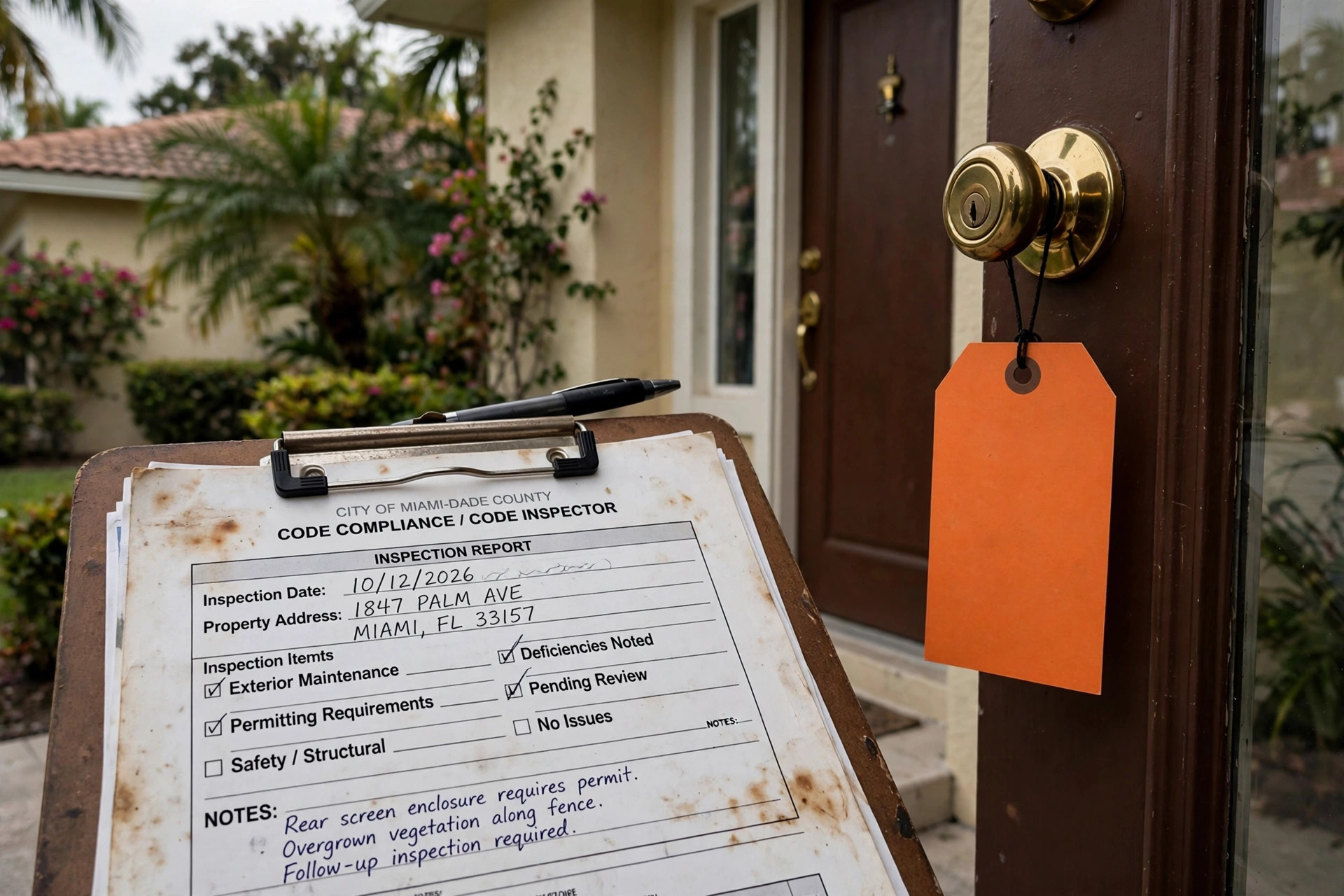
- Code enforcement liens — city or county fines for violations (overgrowth, unpermitted work, unsafe structures) that went unpaid long enough to become liens, sometimes with daily fines behind them. We cover these in depth in selling a house with code violations in Florida.
- Judgment liens — a creditor won a court case and recorded the judgment against you; in Florida it can attach to your real property.
- Mechanics liens — a contractor or supplier who wasn't paid for work or materials on the house.
- IRS and child-support liens — less common, more paperwork, still resolvable at a closing with lead time.
How a lien actually gets cleared at closing
Before any sale, the title company runs a title and lien search. That's how liens surface — including, occasionally, ones the seller didn't know about. For each lien, the title company obtains a payoff figure from whoever holds it: the county, the city, the creditor's attorney. At closing, those amounts are deducted from the proceeds and paid directly to the lienholders, releases get recorded, and the buyer receives clean title. You don't write the checks or make the calls; the settlement statement just shows the deductions, line by line, before you sign.